A young scientist explores the hidden world of groundwater
Beneath the ground lies a whole world with which people rarely come into contact. A world made up of natural tunnels, underground rivers and vast reserves of water flowing through the rock. A landscape invisible to our eyes but essential to the lives of millions of people.
Uroš Jurošević, a hydrogeologist from Bosnia and Herzegovina, is the youngest expert involved in the DIKTAS II project, and it is precisely this hidden underground world that has sparked his curiosity and passion for what lies beyond our sight. Like many students beginning university without knowing exactly where their studies will lead, Uroš discovered hydrogeology without knowing whether it would be the right path for him. He believes geology and hydrogeology remain relatively little known in the traditional school system, despite how closely they are connected to daily life and the management of natural resources.
Fieldwork, the observation of natural systems and university-based training have turned hydrogeology into a genuine passion for Uroš: he has realised that groundwater is both close at hand and mysterious.
"Curiosity is very important in hydrogeology and willingness to learn something, to explore. If you think in this way, hydrogeology can be a very, very interesting career."
Hydrogeology tells a story, brings together numerous scientific disciplines and requires us to look at the problem from many different perspectives. It is a field that rarely offers simple answers and continues to raise new questions.
Karst landscapes, for example, are fascinating to analyse. They behave unpredictably; water can vanish rapidly from the surface, following natural cavities, only to re-emerge kilometres further on as a spring. What appears to be a simple natural feature is in fact the result of an extremely complex and unpredictable underground network. For a hydrogeologist like Uroš, every field expedition represents a new opportunity to observe something unexpected. For example, in the cross-border areas between Croatia and Bosnia and Herzegovina, where the DIKTAS II team is working to better understand the functioning of a shared aquifer, every visit becomes a discovery of springs, sinkholes and unexpected connections.
“One could devote an entire lifetime to studying a single area and still keep discovering something new.”
The behaviour of water in karst systems is constantly changing depending on environmental conditions, and this often poses a challenge even to the experts who must take measurements on a regular basis. Uroš argues that it is precisely this unpredictability that makes the work so stimulating: every piece of data collected does not represent the conclusion of a study, but the start of the next question.
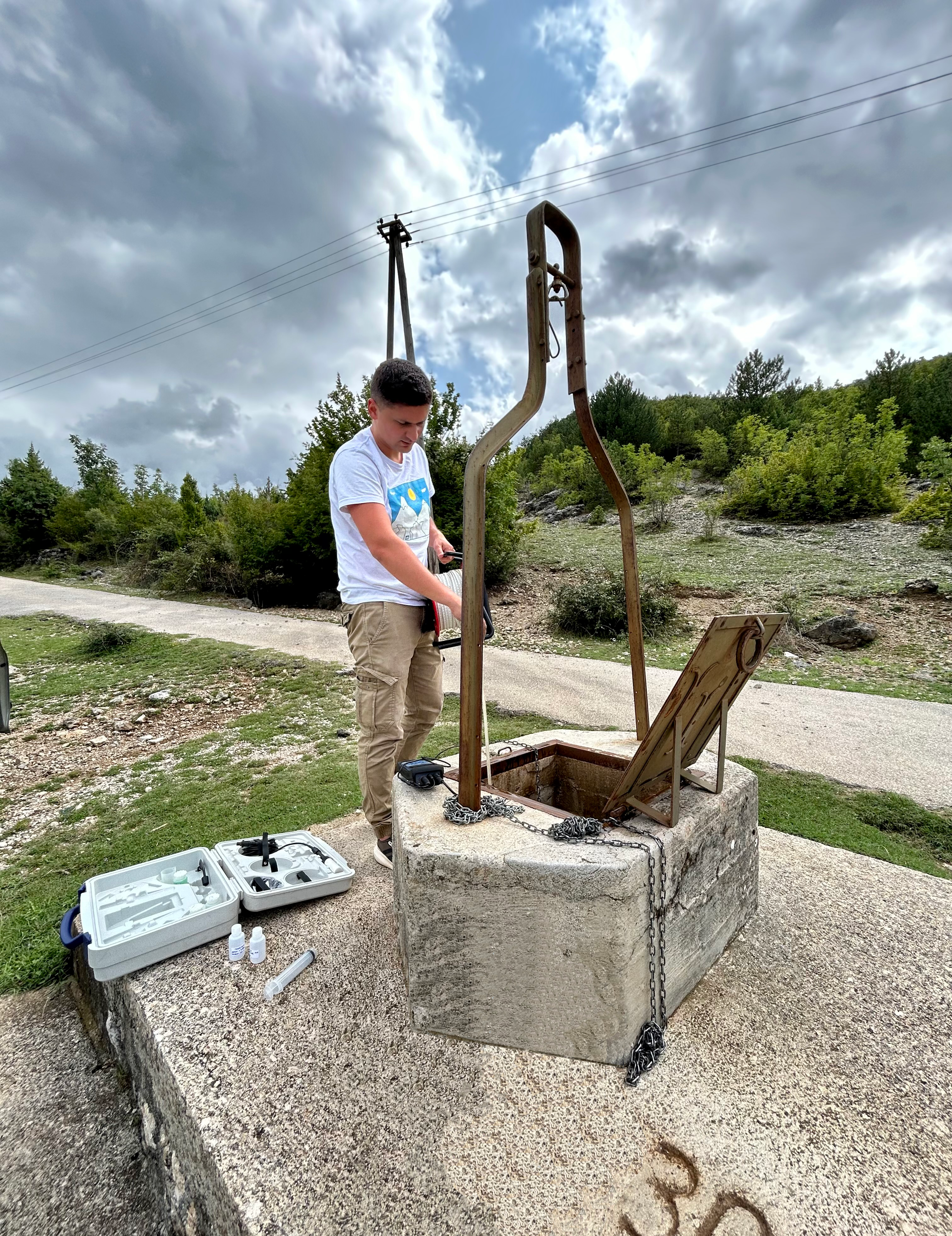
Caption: Uroš Jurošević working in the field
Credit: Uroš Jurošević
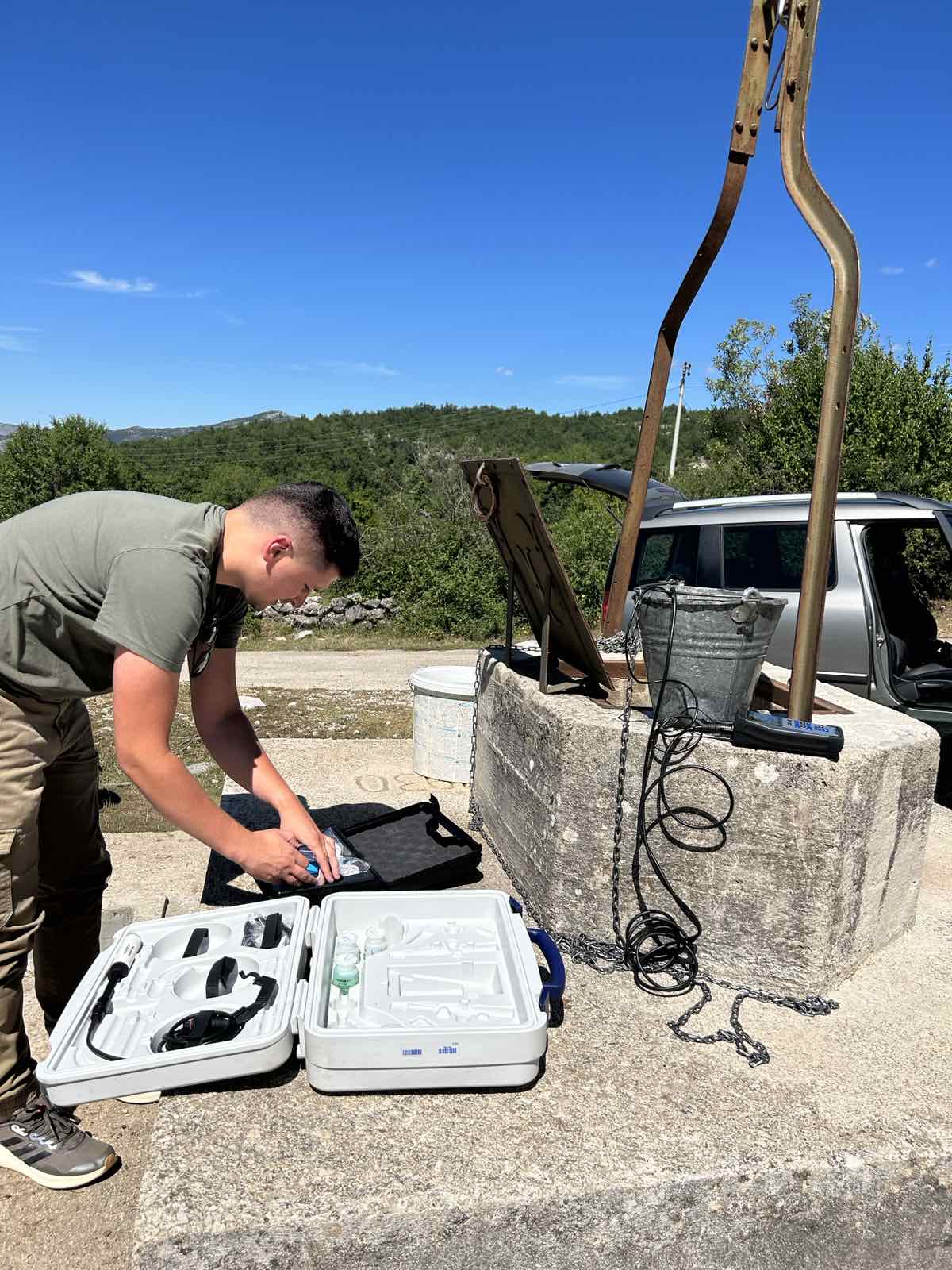
Caption: Uroš Jurošević working in the field
Credit: Uroš Jurošević
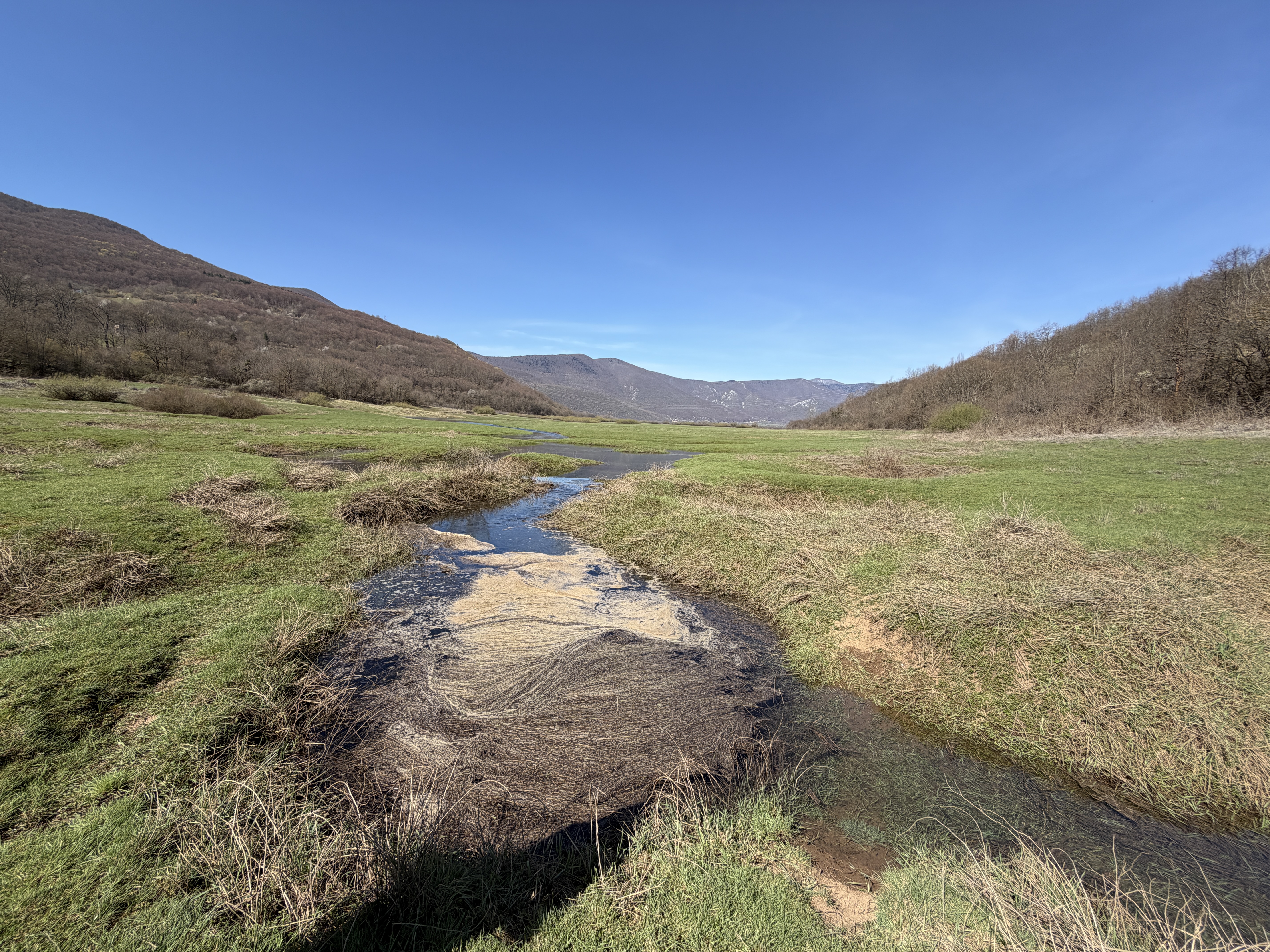
Caption: DIKTAS II - “Bare” swallow-hole zone
Credit: Uroš Jurošević
For Uroš, one of the most formative parts of his professional experience has been working in international and multidisciplinary teams. His first involvement in an international technical cooperation programme showed him what becomes possible when people with different areas of expertise approach the same problem together.
He sees the same principle at work in DIKTAS II. Hydrogeologists work alongside biologists, legal experts, institutions and local stakeholders, each looking at the shared groundwater system from a different perspective. For Uroš, this has reinforced an important lesson: scientific knowledge alone cannot address every aspect of groundwater management.
The questions his generation will face make that cooperation increasingly important. Climate change, growing demand for water and pressures on natural resources mean that understanding how groundwater behaves is only part of the challenge. Protecting it also requires people and institutions to work together across disciplines and borders.
DIKTAS II has also given Uroš the opportunity to work on groundwater as a genuinely shared resource. Water moving through a karst aquifer does not stop at national borders, and neither can efforts to understand and protect it.
For him, this is one of the most valuable aspects of international cooperation: bringing scientific knowledge into contact with the institutions, communities and other stakeholders who ultimately have a role in groundwater management. Without those connections, even good scientific data may struggle to translate into effective protection.
Many professions do not require us to look beyond the surface itself. For Uroš, that is still one of the things that makes hydrogeology so fascinating. The groundwater he studies is all around us, yet much of its journey remains hidden from view.
That sense of discovery has stayed with him since university. Every spring, sinkhole or new measurement can reveal another part of a system that is never completely understood — and often raises another question.
For young people considering the field, Uroš comes back to the quality that first drew him towards it: curiosity. In hydrogeology, there will always be something more to explore beneath the surface.