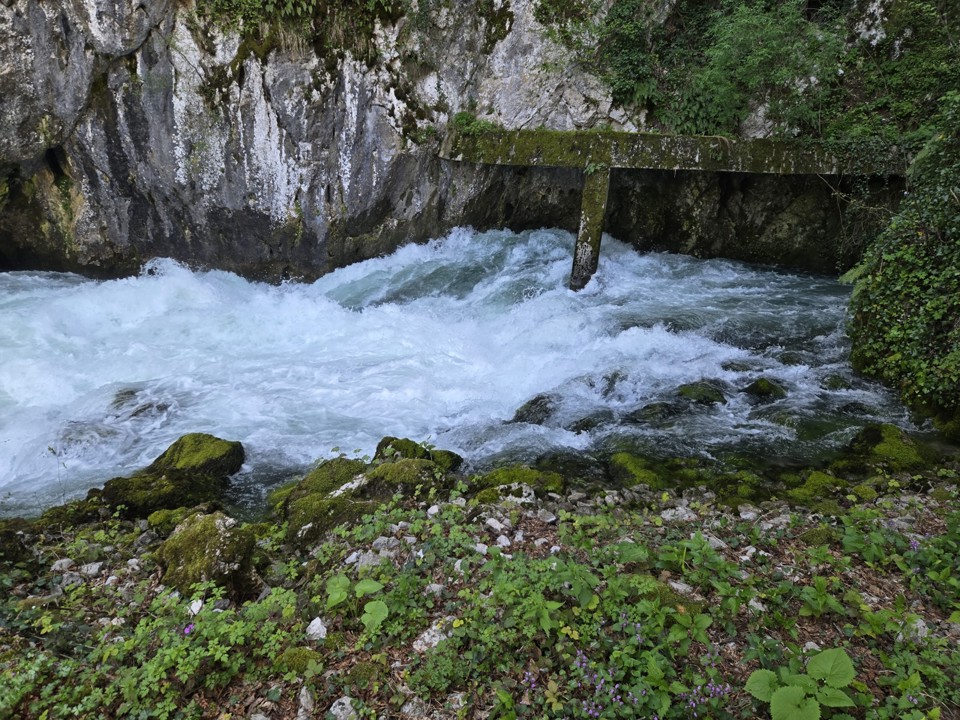
Protecting Shared Groundwater for People and Planet
Beneath the surface of the Dinaric Karst region, groundwater connects ecosystems, landscapes and communities across borders. As the world marks International Mother Earth Day, the DIKTAS II project highlights the importance of protecting this vital — and often invisible — aquifer system that sustains both people and nature.
Across the region, groundwater plays a central role in supporting drinking water supply, economic activities such as tourism and agriculture, and the functioning of groundwater-dependent ecosystems. In sensitive karst environments, water and ecosystems are closely interconnected, meaning that pressures on groundwater can directly affect biodiversity and the health of entire landscapes.
Following the 3rd DIKTAS II expert meeting that took place on 16-17 March 2026 in Trebinje, Bosnia and Herzegovina, the project has taken an important step forward by examining how groundwater is governed across the Western Balkans — and where stronger coordination is needed.
UNESCO, international and national experts from Albania, Bosnia and Herzegovina, Croatia and Montenegro during the meeting advanced coordination and agreed on next steps for the project’s second year during the meeting, including a shared roadmap towards the mid-term review, planned for mid of 2026. In this phase, the project is moving from joint planning to joint practice — ensuring that joint commitments translate into coordinated action on the ground. Building on this roadmap national and international experts have produced a set of diagnostic analyses exploring how countries manage their shared aquifer systems. Together, these assessments mark a shift from planning towards identifying concrete barriers to implementation.
The analyses explore groundwater governance across three key dimensions — legal frameworks, policy and planning, and socio-economic pressures — offering a comprehensive view of how transboundary water resources are managed. While each country has established systems for groundwater management, important differences remain in how these systems are implemented and coordinated.
What emerges clearly is that groundwater systems are shared, but governance frameworks are not always aligned. The analyses show that, while countries share the same aquifers, they often apply different rules for managing them, which can lead to uneven levels of protection across borders, even within a single groundwater system. At the same time, gaps in groundwater, surface water and biodiversity monitoring and limited data exchange can make it harder to detect and respond to emerging risks, particularly in transboundary contexts where impacts may only become visible after crossing national borders.
In some parts of the region, limited wastewater treatment and informal waste disposal pose additional risks to groundwater quality. In karst aquifers where natural self purificarion process is minimal, pollutants can move quickly through underground systems, potentially affecting drinking water sources and sensitive groundwater-dependent ecosystems.
“Groundwater does not follow national borders, which makes cooperation essential. Protecting this shared resource is also about protecting ecosystems and the communities that depend on them,” noted groundwater experts involved in the project.
The findings also highlight a broader message: improving groundwater governance is not only a technical challenge, but also an institutional and coordination one. Strengthening cooperation between sectors, improving monitoring and data exchange, and aligning national approaches are essential steps towards ensuring that shared groundwater resources are managed sustainably.
Looking ahead, the diagnostic analyses will serve as a foundation for the next phase of DIKTAS II project: joint action programmes, harmonized monitoring approaches, and targeted capacity-building efforts across the region. By translating shared knowledge into coordinated action, countries will be better equipped to protect the Dinaric Karst Aquifer System and the ecosystems and communities that depend on it.
DIKTAS II teaches us that protecting the natural systems that sustain life on Earth is a shared responsibility. By strengthening groundwater governance across borders, the project supports healthier ecosystems, more resilient communities, and a more sustainable future — in line with the International Mother Earth Day's call.
Contact
Project contact: Sinisa Sesum, Head of UNESCO Antenna in Sarajevo, s.sesum@unesco.org
Boban Jolović, Project Manager, b.jolovic@unesco.org
About the project
DIKTAS II is a Global Environment Facility (GEF) International Waters project implemented by UNDP and executed by UNESCO. It supports transboundary cooperation to improve groundwater governance and promote sustainable management of the Dinaric Karst Aquifer System across Albania, Bosnia and Herzegovina, Croatia and Montenegro.
Related content
- DIKTAS II project website: https://diktas2.iwlearn.org/
- UNESCO DIKTAS II project page: https://www.unesco.org/en/articles/implementation-strategic-action-programme-sap-dinaric-karst-aquifer-system-improving-groundwater
- IW Learn project Page: Implementation of the SAP of the Dinaric Karst Aquifer System: Improving Groundwater Governance and Sustainability of Related Ecosystems
Photos
- Cover photo/banner image:
- Caption: “Karst landscapes of the Western Balkans, shaped by shared groundwater, underscore the need for coordinated aquifer management—an International Mother Earth Day reminder that water connects people and nature across borders.”
- Credit: Mike Swigunski / Unsplash
Social media messages
X: https://x.com/UNESCOVenice/
🌍 For #EarthDay, DIKTAS II highlights how shared groundwater links people & nature across borders. 💧 New diagnostic analyses help identify barriers to coordinated management of the Dinaric Karst Aquifer System.
LinkedIn / Facebook: https://www.facebook.com/
🌍 International Mother Earth Day is a reminder that the planet’s water systems are connected — above and below ground. 💧
DIKTAS II has developed new diagnostic analyses on transboundary groundwater governance in the Western Balkans, helping countries identify barriers and strengthen cooperation for the sustainable management of shared aquifers.
Instagram: https://www.instagram.com/s/
🌍 International Mother Earth Day reminds us that water connects ecosystems, landscapes and communities — even across borders. 💧
DIKTAS II’s new diagnostic analyses explore how shared groundwater is governed in the Western Balkans, and what needs to improve to turn cooperation into action.
#EarthDay #InternationalMotherEarthDay #Groundwater #Karst #UNESCO #UNDP #GEF #WaterGovernance #TransboundaryWater #SharedAquifers #Sustainability #WesternBalkans #Sustainability